

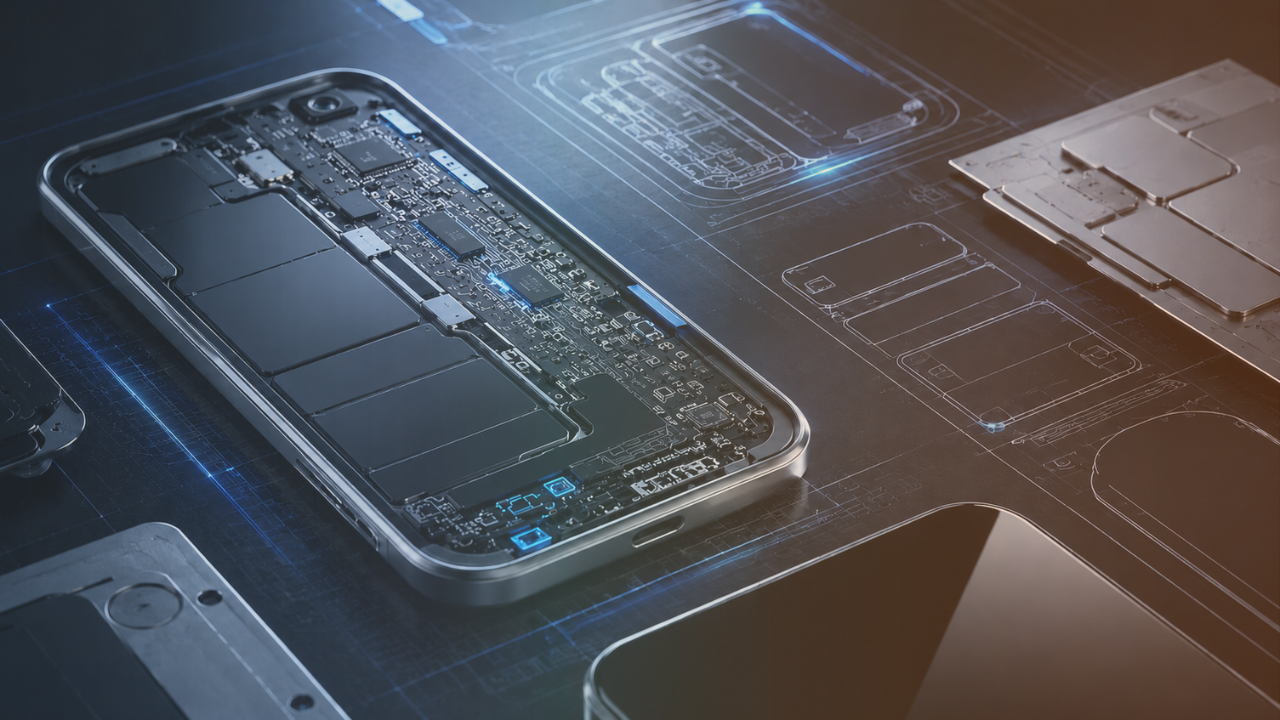
On July 10, 2026, the most valuable company in the world accused the most talked-about company in the world of theft. Apple sued OpenAI in the U.S. District Court for the Northern District of California, alleging that OpenAI built its hardware ambitions on a foundation of Apple’s misappropriated trade secrets.¹ Few disputes touch as much of Certum’s Trade Secret Litigation Playbook at once: reasonable measures to guard a secret, identifying with particularity what was taken, and the human-centered points — recruiting and employee departures — where secrets actually walk out the door. Nearly every core theme in Certum Group’s Trade Secret Guide is in this case. And the lesson beneath it is worth sitting with: for the companies with the most to protect, trade secret litigation is not a last resort. It’s a front-line instrument of competitive strategy. Background The dispute sits at the intersection of two of the most closely watched storylines in technology. In 2025, OpenAI acquired io, the hardware venture founded by former Apple design chief Jony Ive and a group of other Apple alumni, for a reported $6.5 billion, and set out to build its first consumer hardware device, widely expected to compete directly with the iPhone.² To staff that effort, OpenAI hired aggressively from Apple. According to the complaint, more than 400 former Apple employees now work at OpenAI.³ Two of those hires anchor Apple’s allegations. Tang Yew Tan spent roughly 24 years at Apple, where he served as a vice president of product design responsible for the iPhone and Apple Watch, before becoming OpenAI’s chief hardware officer. Chang Liu spent about eight years at Apple as a senior systems electrical engineer before departing for OpenAI in 2026.⁴ Apple’s theory is not that a single rogue employee walked out the door with a file. It is that the movement of talent was accompanied by a coordinated effort, one Apple describes as operating “at every level," to extract and exploit the confidential information those employees carried in their heads and on their devices.⁵ The Allegations The complaint reads less like a garden-variety departure dispute and more like a catalog of the exact conduct the Trade Secret Guide warns companies to watch for. Among Apple’s central allegations: Apple claims OpenAI’s hardware leadership directed recruiters to use Apple’s confidential project code names during the hiring process, and instructed job candidates to bring “actual parts” and “CAD/design artifacts” to their interviews.⁶ It alleges that OpenAI circulated internal Apple documents marked “Need to Know” that coached departing employees on how to evade Apple’s exit-security procedures, including the “dreaded walkout,” and to alert OpenAI before signing their exit agreements.⁷ The specifics attributed to individual employees are what give the complaint its texture. Apple alleges that Chang Liu exploited an authentication bug to reach internal network storage after his access should have been cut off, messaging a colleague, “LOL, I found out I can access the [network storage], so funny,” and noting within hours of his departure that he “still ha[d] another computer.”⁸ And Apple alleges that io “exploited and used Apple’s secret, proprietary industrial design techniques,” misleading one of Apple’s own manufacturing partners about whether it was authorized to use a confidential metal-finishing technique.⁹ The trade secrets Apple says are at risk span the full arc of its product-development process: technical specifications for unreleased technologies, engineering presentations and prototype data, component and vendor selection processes, and the proprietary manufacturing techniques that turn a design into a shippable product.¹⁰ Notably, Apple’s opening ask is not a damages windfall. It is protection. Apple seeks to bar OpenAI from using or disclosing the information at issue, to compel the return of its confidential materials, and to preserve the evidence.¹¹ In other words, Apple is using the courthouse to do what its NDAs and exit interviews were supposed to do: keep its edge inside the building. OpenAI’s Response OpenAI has pushed back hard, and its answer is a preview of the fault lines any trade secret plaintiff should expect to fight over. On August 6, 2026, OpenAI moved to dismiss, characterizing the alleged conduct as “benign, lawful conduct” that Apple has mischaracterized, and arguing that its hardware executives simply followed standard industry recruiting practices.¹² As to Chang Liu, OpenAI contends he was “trying to help Apple” by assisting former colleagues who asked him to locate work information, not stealing anything.¹³ More pointed, and more instructive, is OpenAI’s argument that Apple’s own conduct undermines its case. OpenAI asserts that Apple allowed employees to use personal iCloud accounts for work and failed to properly revoke access when they left — noting that an Apple manager remained logged into Chang Liu’s personal iCloud account after his departure in order to transfer files.¹⁴ From that, OpenAI argues that Apple’s offboarding lapses created “confusion and unwanted access issues that Apple now characterizes as theft.” OpenAI also contends that Apple has not identified its trade secrets with adequate specificity, pointing instead to “generic categories of the product-development process.”¹⁵ OpenAI must file its full response by August 17, 2026, with oral argument on the motion set for October 1, 2026.¹⁶ Whatever the merits, OpenAI’s playbook is worth studying precisely because it is so conventional. Reasonable secrecy measures and identification of the trade secret with particularity are two of the elements every misappropriation claim rises or falls on, and they are exactly where a well-resourced defendant will apply pressure first. What This Means It is easy to read a case like this as celebrity litigation between two of the most valuable enterprises on earth. The more useful reading is that trade secret law has become core infrastructure for how modern companies protect competitive advantage. Apple did not respond to a $6.5 billion competitive threat with a press release or a patent portfolio. It responded with a trade secret complaint, because in a business where the crown jewels are unpatented know-how — manufacturing techniques, vendor relationships, unreleased designs — the Defend Trade Secrets Act and its state-law counterparts are the sharpest tools available. The case also throws the Trade Secret Guide’s central lessons into relief. The value of a trade secret program is only as good as the “reasonable measures” behind it; OpenAI’s opening move is to argue that Apple’s own iCloud and offboarding practices were not reasonable at all. The ability to describe what was taken, with specificity, is not a formality. It is frequently the whole ballgame at the pleading stage. And the human element — recruiting, exit procedures, the “dreaded walkout” — is where secrets actually leak, long before anyone reaches a courtroom. Companies that treat these as compliance checkboxes learn the hard way, in a complaint, that they were the strategy all along. For those of us who evaluate disputes for a living, Apple v. OpenAI is also a reminder of why high-stakes trade secret matters are among the most compelling on the plaintiff’s side. The conduct is often concrete and documentable, the competitive stakes are enormous, and, as the Federal Circuit’s recent decision in Versata Software v. Ford underscored, the damages framework can reach the full value of what the misappropriation delivered to the wrongdoer, not merely a discounted license fee. That combination is exactly what makes these cases worth pursuing, and worth backing. Apple’s complaint will be tested, as it should be, and the allegations remain just that — allegations. But the strategic signal is already unmistakable. When the most valuable company in the world wants to defend its future, it reaches for trade secret law. Certum Group’s Trade Secret Guide is built to help plaintiffs and their counsel do the same, whatever their size, and this case is a live illustration of why that playbook matters now more than ever. Certum Group can help. If you are evaluating a trade secret dispute or want to talk through options for funding or de-risking one, get in touch . Footnotes ¹ Complaint, Apple Inc. v. OpenAI, Inc. , No. 5:26-cv-07078 (N.D. Cal. filed July 10, 2026); see Apple sues OpenAI over alleged trade secret theft , TechCrunch (July 10, 2026). ² The wildest allegations in Apple's trade secrets lawsuit against OpenAI , TechCrunch (July 13, 2026). ³ Id. ⁴ Apple sues OpenAI over alleged trade secret theft , TechCrunch (July 10, 2026). ⁵ Apple sues OpenAI alleging trade secret theft, says scheme was "at every level," CNBC (July 10, 2026). ⁶ The wildest allegations in Apple's trade secrets lawsuit against OpenAI , TechCrunch (July 13, 2026). ⁷ Id. ⁸ Id. ⁹ Id. ¹⁰ Apple sues OpenAI over alleged trade secret theft , TechCrunch (July 10, 2026). ¹¹ Id. ¹² OpenAI Asks Judge to Toss Apple's Trade Secrets Lawsuit , Claims Journal (Aug. 7, 2026). ¹³ Id. ¹⁴ OpenAI says Apple's own security practices undermine its trade secrets case , TechCrunch (Aug. 6, 2026). ¹⁵ Id. ¹⁶ OpenAI Asks Judge to Toss Apple's Trade Secrets Lawsuit , Claims Journal (Aug. 7, 2026).
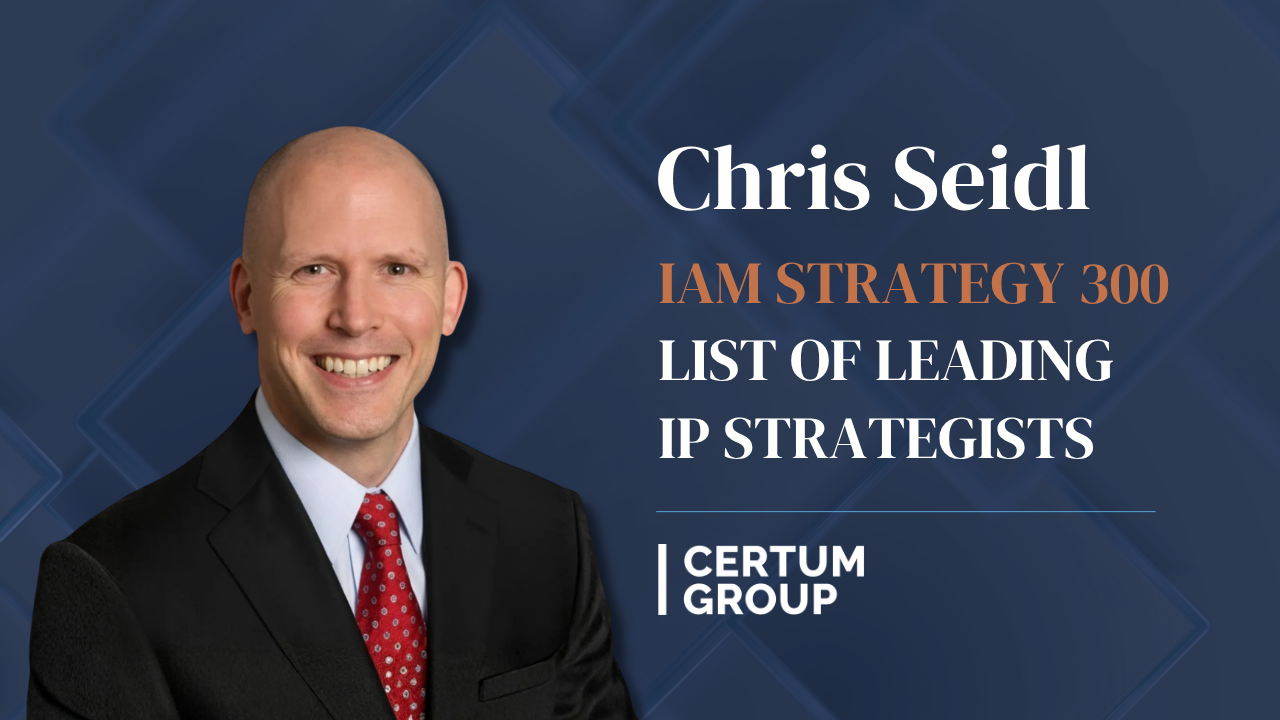
Certum Group is pleased to announce that Chris Seidl has been named to the 2026 IAM Strategy 300: The World’s Leading IP Strategists list. IAM Strategy 300 is a global ranking of IP strategists who are leaders in developing and implementing strategies to maximize the value of IP portfolios. IAM identifies individuals through extensive research annually. Chris leads Certum’s IP finance strategy, including IP licensing, litigation funding, and acquisitions. This is the fifth consecutive year Chris has been included on the IAM Strategy 300 list. Click here to see the complete rankings.
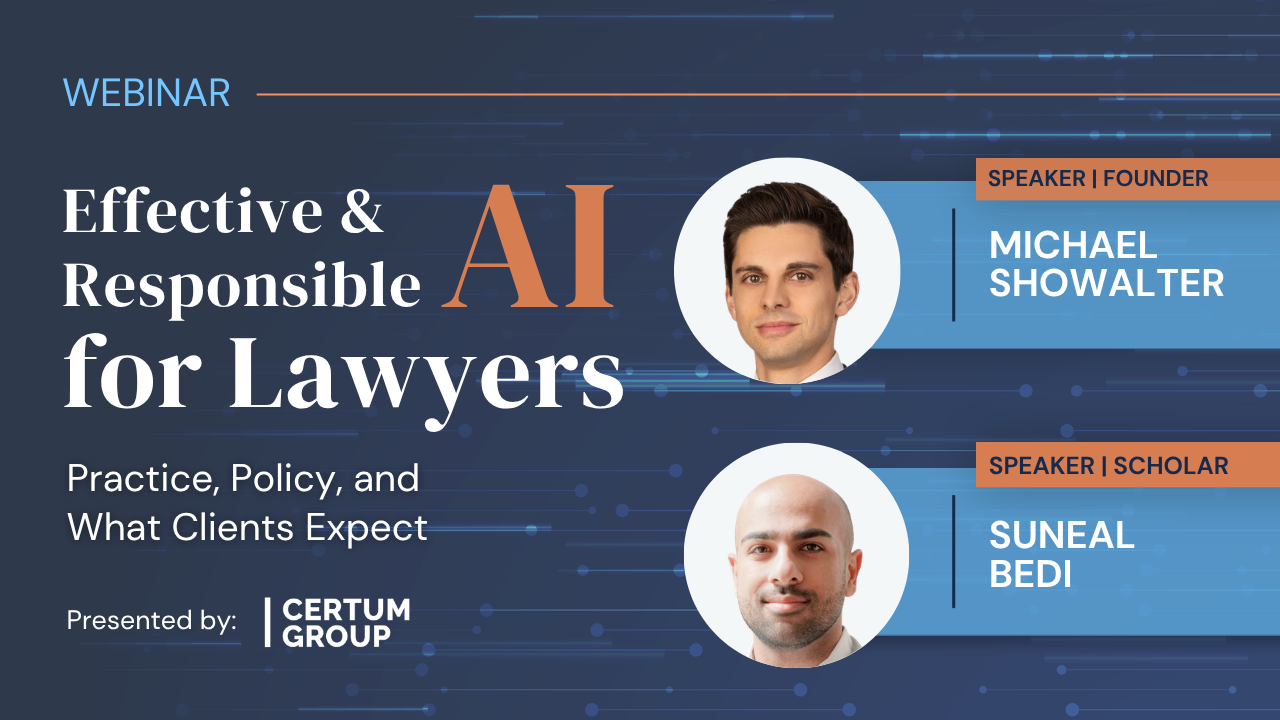
Artificial intelligence is quickly changing how legal work is researched, drafted, reviewed, and delivered. But while AI can improve efficiency, it also creates serious risks, including inaccurate analysis, fabricated citations, and potential court sanctions. In this webinar, Certum Group brings together legal and business experts to discuss how lawyers can use AI to strengthen their work without compromising accuracy, professional judgment, or accountability.